
Travel and Intentional Living
Jan 29, 2026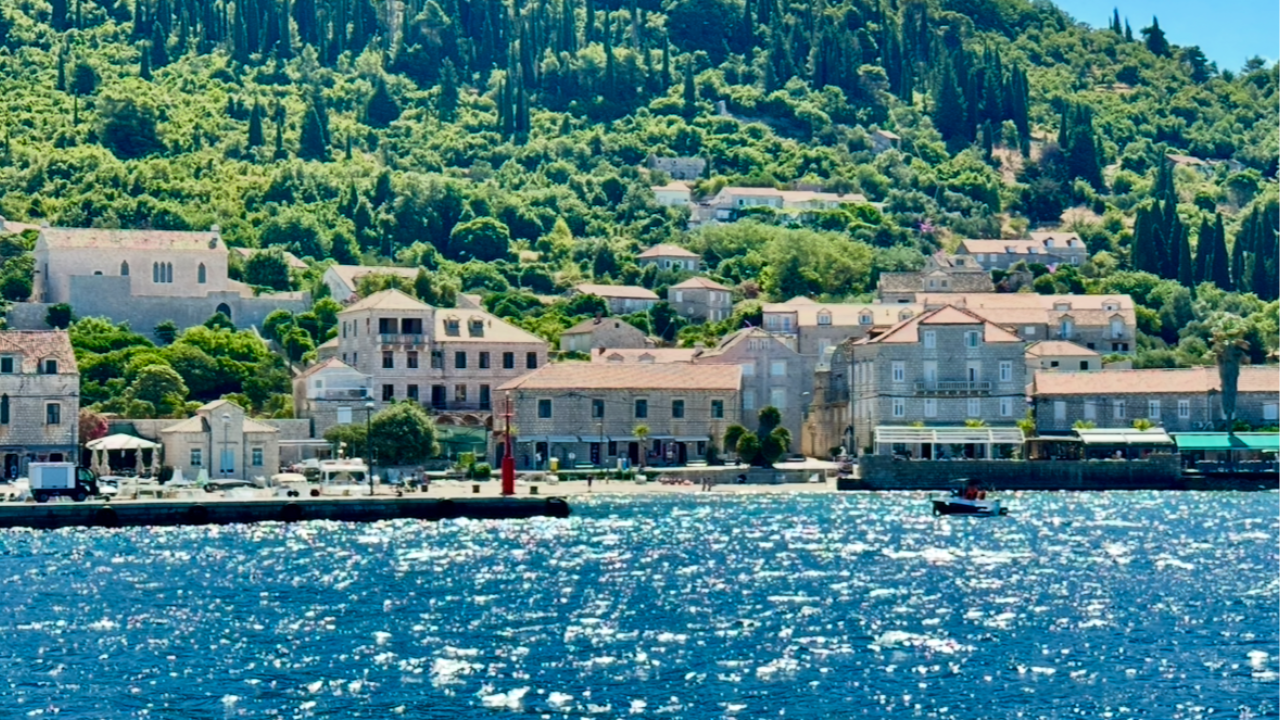
A philosophy I keep coming back to
Years ago, Gilbert Enoka (then mental skills coach for the All Blacks) spoke to a leadership team I was part of about the importance of always having three types of breaks in your calendar.
Small breaks you take regularly throughout the day.
Mid-sized breaks like weekends away or long weekends.
And longer breaks, proper holidays.
What struck me wasn’t just the idea itself, but the way it framed recovery as something deliberate rather than accidental. Not something you earn once you’re exhausted, but something you plan for in advance.
It’s a philosophy I’ve shared with clients ever since, and one that tends to resonate deeply. I’ve seen it make a real difference to people’s energy levels, focus, and overall enjoyment of both work and life.
I also think there’s a genuine obligation here for leaders. If you want to perform at your best, you have to take your time off seriously (and ensure your team does too). And if travel is available to you as part of that, then even better.
Over the last few years, travel has become a significant part of that third category for me.
Sometimes that’s travelling and working at the same time. Sometimes it’s proper time off.
And often, over the years, it’s been a mix of both.
Either way, a large part of my career and my life has been spent on the road. More recently, close to 50 percent of the last two to three years have been spent traveling and sometimes working rather than staying put.
As a result, I’ve picked up a very specific set of skills when it comes to travel.
Let’s face it, I don’t know who you are. I don’t know whether you even enjoy travelling.
But what I do know is that if you do, then this particular set of skills could prove useful to you.
(Sorry. I couldn’t resist.)
Those skills and lessons are captured below. I should note, I took some inspiration from Kevin Kelly’s 50 years of travel tips but we diverge in a number of spots (he is more adventurous - I wouldn’t crash a wedding or go visit a taxi driver’s mother) and I have more of a focus on health and other areas that I found relevant.
Travel lighter than you think you need to
One thing I believe passionately about is this: the longer you travel, the lighter your suitcase should be.
There’s really no compromise here. To be specific you do not want a suitcase taller than 67 centimetres. That’s a mid-sized suitcase, and it’s more than enough. You can hold a surprising amount in it if you pack properly, and you are going to have to lift it onto trains, into overhead compartments, and up flights of narrow staircases. Don’t make this harder on yourself.
Anything bigger becomes a liability pretty quickly.
Laundry is easy to sort. Local laundromats are inexpensive. There’s simply no need to carry your entire wardrobe with you.
If I could, I’d travel carry-on only for long trips. In fact having experienced the benefit of this philosophy when working, I was excited to share it with my wife as something we should embrace for long trips. They say you remember traumatic moments in your life. I still remember the day when I suggested we take a 7kg carry on suitcase on a 5 month trip. Sometimes I still wake up in sweats thinking about that moment. Apparently when you hear news that is significant or life changing you move through 5 stages called SARA. Which you cycle through – not always in order. Essentially it’s Shock, Anger, Rejection and Acceptance. That was exactly the reaction I got from my wife minus the acceptance. She simply stopped at rejection. Actually that’s not true, we finally reached acceptance once I had been explained the error of my ways – the acceptance was that I had been a fool to suggest such a preposterous idea. The compromise we settled on was a maximum weight of 16 kilograms. Which I might add was only met by me….I wish you better luck in your discussions! Nonetheless the principle still stands in my view.
Toiletries are a silent killer when it comes to weight. Small travel containers only. You really don’t need full-sized anything.
If you like stretching or training while you’re away, there are a few lightweight things that genuinely earn their place. A compact travel yoga mat folds down and weighs almost nothing. A short foam roller fits easily too and I often pack a small suspension training straps that rolls up and stores inside the foam roller. You end up with a compact, mobile kit that lets you attach it to a door and get a decent bodyweight session in almost anywhere.
Books, reading, and being realistic
I’m an avid reader. Books are one of my passions and something I do daily. I still prefer a paperback over a Kindle every time.
But if you’re travelling for long periods, you have to be realistic. You simply can’t take enough physical books with you, and you won’t always find what you’re looking for on the road. Actually that’s an exaggeration, you pretty much never find what you are looking for. That’s where the Kindle comes into play.
I strike a balance. Paperbacks when I can (leave them for others at various points), Kindle when I need to. It lets me carry a library without the weight.
I also enjoy books that help me sharpen my thinking and continue developing my coaching craft, alongside books that are purely for escape. Travel tends to create the space for both.
Collect memories you can revisit
One of the underrated benefits of travel is that it happens in three phases. You anticipate it long beforehand. You enjoy it while you’re there. And you reflect on it afterwards.
Those small reminders matter. But you don’t need something from everywhere. Just from the places that really resonate with you. Think about where they will go when you get home.
To keep things light, make them small. I picked up coasters from a handful of places that stood out. I spend a lot of time in my study drinking tea, and those coasters have become simple prompts for reflection and memory.
And speaking of tea, I always carry a small selection of teas I enjoy. Sometimes it really is the small things that bring disproportionate joy.
How travel restores you and what to take notice of
There’s solid research showing that time off has real physical and psychological benefits.
Vacations are associated with reduced cortisol levels, improved sleep quality, and higher heart rate variability, which is a marker of recovery and nervous system balance.
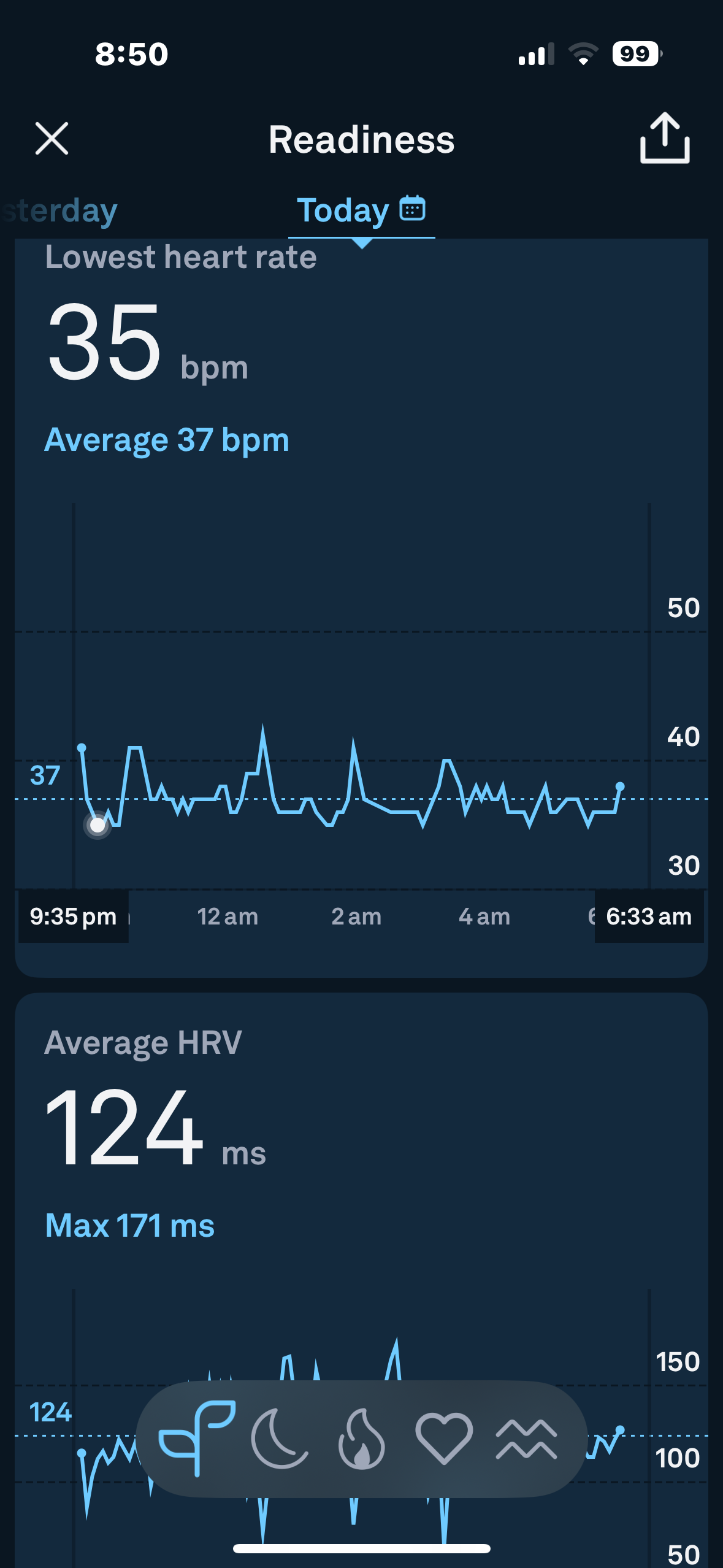
From a personal perspective, I see this very clearly in my own data. My resting heart rate typically drops by around five beats per minute when I’m on holiday, and my heart rate variability increases by about thirty points. That’s a substantial shift toward recovery and calm.
You don’t need to track any of this to benefit from it, but the data does confirm what most people intuitively feel.
This is where I nerd out a bit. I review the data from my watch and ring and look at which places were genuinely the most relaxing and supportive of heart health. Over time, that’s helped me understand the combination of factors that I personally find most restorative, things like being near water, being in the mountains, or simply being somewhere quieter. Who you are with also factors in.
The stats shown below are an example of the kind of data I look at. I also have my watch alert me when my heart rate stays below a certain threshold for more than ten minutes, just so I could learn which environments consistently created the deepest sense of relaxation.
The data below was from Dubrovnik in Croatia. What a place! I was so relaxed I was close to flatlining…
The broader point is simple. Pay attention to how different environments affect you. It’s essential to be aware of what relaxes you and what drains you.
That awareness is useful not just for you, but for the people you travel with as well. Travel becomes far more enjoyable when you understand what genuinely restores you and those you are with.
Start well, finish even better
There’s a well-established psychological principle known as the peak-end rule. In simple terms, we tend to remember experiences not by averaging everything that happened, but by how they felt at their most intense moments and how they ended.
Beginnings and endings matter disproportionately.
Those “peak” moments are often the ones that stretch us slightly outside our comfort zone. Not necessarily adrenaline-fuelled adventure, but moments that are novel, unfamiliar, or require us to be more present. Interestingly, these are also the moments where time seems to slow down. The research shows that when we experience novelty or mild discomfort, our brains encode memories more richly, which is why those moments stay with us long after the details of the rest of the trip fade.
The start of a trip sets the tone. The ending shapes the story you tell yourself about the whole experience. A relaxed finish, a great final meal, a quiet walk, these moments tend to linger far more than the rushed middle.
It’s worth planning for that deliberately. Ease into travel when you can. Build in space at the end. Avoid sprinting through the final days, exhausting yourself, and then dropping straight back into work. How you finish doesn’t just affect how you remember the trip. It influences how rested, energised, and clear-headed you feel when you return.
Be smart, not stressed, about the logistics
A few practical things that make long trips far easier.
If you’re travelling for more than three months, it’s worth checking whether your domestic health insurance can be paused. In New Zealand, providers like Southern Cross allow this, and similar arrangements often exist elsewhere. There’s little point paying for cover you can’t use.
For travel insurance, and without offering financial advice, I’ve found credit card insurance to be surprisingly robust for longer trips. The policies I’ve reviewed closely mirror those of major insurers, often underwritten by the same companies. Many cards allow extensions for longer travel periods, usually at a lower cost than standalone travel insurance. Always check the policy details and request the documentation.
When it comes to spending money, Wise has consistently been the lowest-cost and most flexible option I’ve used although I’m sure there are others. Low conversion fees, easy access to small amounts of cash, and transparent tracking. Over long trips, it makes quite a difference.
One practical rule that’s worth remembering: never convert to your home currency at the point of purchase.
If you’re paying for something overseas and you’re given the option to convert immediately back to your home currency, for example New Zealand dollars, don’t take it. Always choose to pay in the local currency. The same applies when withdrawing cash. If you’re asked whether you want the withdrawal converted into your home currency, always decline and take the local currency instead.
The reason is simple. When you accept the on-the-spot conversion, you’re letting the merchant, ATM operator, or terminal provider set the exchange rate. Those rates are almost always significantly worse than the rate your bank or card provider would apply. This practice is known as dynamic currency conversion, and in my experience, you are always worse off. Sometimes only slightly. Sometimes materially.
If you use Wise, this largely takes care of itself, as you’re already operating in local currency with transparent conversion rates. But even if you’re using a standard debit card, the principle still applies. Local currency almost always results in a better outcome than letting someone else convert it for you.
It’s a small decision, but over a long trip it can make a meaningful difference.
Apple Pay is widely accepted, but it’s still linked to an underlying card. In my experience, credit card conversion rates tend to be higher, so it pays to be intentional about what you use where, although be aware if your card insurance requires a percentage of spend on that card to be eligible for insurance.
For connectivity, it’s worth being intentional about how connected you actually want to be.
One of the underrated benefits of travel is stepping away from constant availability. Being online all the time isn’t always helpful. Most accommodation has Wi-Fi morning and night, and that’s often more than enough. You can also download Google Maps offline. It has some limitations, but most people don’t realise this feature exists.
The key is to decide upfront when you want to be connected and when you don’t. Make sure roaming is properly turned off, not just to avoid surprise charges, but to remove the default of being always “on”.
If you do want to be reachable during the day, or you genuinely need people to be able to contact you, international eSIM providers like Nomad are worth considering. They generally offer better value and more flexibility than daily roaming over longer trips.
None of this is meant to be financial advice. It’s simply my experience and perspective. Please get your own advice.
Plan less than you think you should
On our first long overseas trip, we planned about 80 percent of it and left 20 percent unscripted. The unscripted portion was by far the most enjoyable.
On our next big trip, we planned about 5 percent and left 95 percent unplanned. That was even better.
You’ll always hear people say you won’t get accommodation or you’ll miss out. In our experience, that’s almost never true. I think it happened once. The diversion we had to take turned into one of the better parts of the trip.
To the person who travels with a ring binder and has every meal planned in advance, I see you. And if that brings you joy, go for it. Just experiment with more white space (within your plan) and see how it feels.
This is also where ChatGPT proved genuinely useful. We built a simple travel profile based on places we’d loved, things we enjoy, and why. It helped suggest destinations that aligned with that profile, and also recommended the top five things to do in each place based on our interests.
From there, we took what appealed and ignored the rest. After each stop, we fed back what we liked and didn’t like, which made future suggestions even more relevant. It sent us to some fantastic places we never would have considered otherwise.
Follow an interest, not a checklist
One of the most useful ideas I’ve borrowed is organising travel around interests rather than destinations.
Kevin Kelly makes a great point here. Travel works best when it’s not treated like a checklist.
It doesn’t even have to be your interest. It could be the interest of someone you’re travelling with, a family member, or something you’ve read about.
For us, it was tea. That single interest took us into neighbourhoods, cafés, and everyday parts of cities we never would have seen otherwise. We walked more, noticed more, and experienced places well beyond the obvious highlights.
Whether it’s food, music, architecture, history, or something slightly obscure, following an interest tends to lead you away from the expected and into far more memorable experiences.
Move on if its not for you but take enough time to really experience
If you’re travelling flexibly, two nights as an initial booking will be enough to make a call. If you love it, stay longer.
That said, you don’t want to move every two or three nights for an entire trip. Make sure you also build in longer stays in places you really enjoy. Those longer periods are where you properly slow down and tend to be the most relaxing and enjoyable.
I’d also encourage you not to stay too long in major cities. Cities are interesting, but you tend to experience a country more deeply once you get out of them. Do the key attractions, then move on.
In many parts of the world, particularly Europe, you don’t need a car everywhere. Many beautiful villages are accessible by train. There are still places where a car makes sense, but it doesn’t need to be the default.
Book accommodation with intent
I’ve used plenty of Airbnb and Booking.com, and both are useful. But more often than not, going direct to the accommodation gets you a better deal.
Look for a few things. A balcony, if you can get one, makes a big difference, especially in summer. Air conditioning is becoming increasingly important in many regions. Natural light matters more than you think, so pay attention to windows and room orientation.
If you’re staying in apartments, bring a couple of coffee pods and a few washing tablets. The machines are usually there. The supplies often aren’t.
One small thing I always travel with is a roll of black tape. Any room you stay in, whether it’s a hotel, apartment, or Airbnb, has a remarkable talent for hiding tiny but incredibly bright lights, air-conditioning displays, standby LEDs, or gaps where curtains don’t quite meet. A small piece of tape can solve all of that in seconds and significantly improve your sleep.
Schengen Zone considerations
If you’re travelling in Europe on a non-European passport, it’s important to understand the Schengen Zone rules. In most cases, you’re limited to 90 days within any 180-day period across the Schengen countries as a whole, not per country. However, this is where it pays to dig a little deeper. Some countries have bilateral visa waiver agreements with specific passport holders that allow you to stay longer in that country once your 90 days in the Schengen Zone is up. For example, travelling on a New Zealand passport, there are several countries, including France, Spain, and Switzerland, where extended stays are possible under these agreements. The rules are nuanced, often poorly explained online, and do change, so your best bet is to contact the relevant embassy directly to confirm the most up-to-date position. It’s also worth noting that while a British passport once allowed relatively unconstrained movement around Europe, Brexit has changed that significantly. Passports like Irish remain extremely powerful, so if you’re eligible through ancestry, it’s well worth exploring. The broader point is simple: understand the rules, know your options, and plan accordingly. It can materially expand how long you’re able to travel without stress.
Temperament matters more than the plan
Things won’t always go to plan. You’ll miss a train. Something will be booked out. Weather will change.
That’s part of the gig.
Treat it as an adventure. Don’t complain. Travel has a way of amplifying temperament, for better or worse.
Be conscious of basic travel etiquette too. In places like Japan, it’s considered rude to talk on the phone on public transport. Phones are kept on silent and calls are avoided. It’s a good rule, and one the rest of the world could probably adopt.
More broadly, putting your phone on loudspeaker and conducting a full conversation in a restaurant, train, or transit area should never be the default. The only acceptable exception is if you genuinely don’t understand how the technology works or you are clearly outside the hearing range of anyone else. Otherwise, no, no, no, no, no.
A final thought
After a few years of travelling this way, it’s hard to imagine doing it differently. But we will continue to refine and experiment.
Travel doesn’t always have to be overseas. Having travelled extensively internationally, I can confidently say that New Zealand has some of the most beautiful places in the world to explore. We always make a point of travelling locally as well. In fact I can get similar health stats from long weekends away in rural NZ spots with family or close friends.
Not everyone has the same level of access or privilege when it comes to travel. But if you can engineer your work and your life to allow even small moments of travel, those moments can make a meaningful difference.
If travel is available to you, make it happen. Be deliberate about it. Build it into how you live and how you work, not as something you squeeze in once everything else is done.
Happy travelling!
